

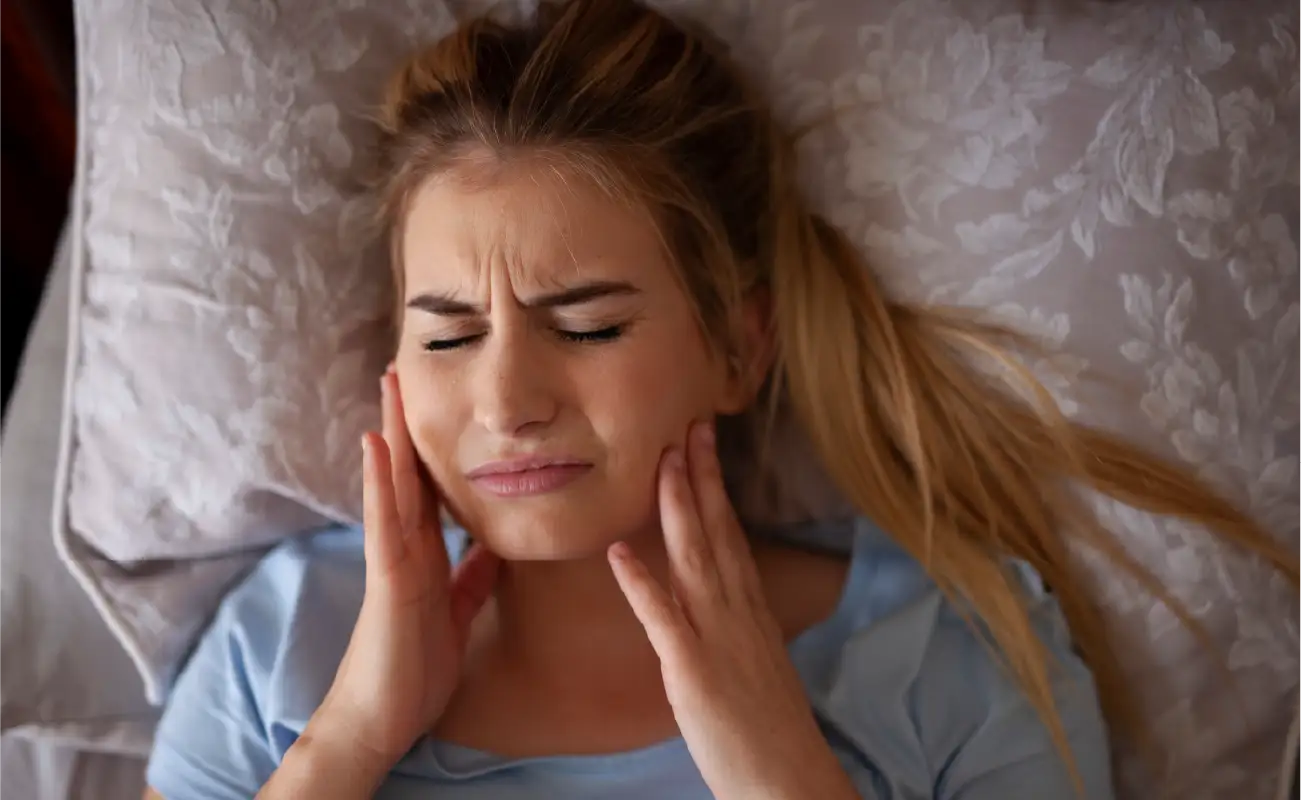
Key Takeaways
- Sleep-related teeth grinding is known as bruxism.
- It can impact the quality of your sleep and the health of your smile.
- Bruxism wears down enamel and can result in jaw pain, headaches, and TMJ issues if ignored.
- Even if you don’t hear grinding, morning headaches and tooth sensitivity can be warning signs.
- Managing stress, improving sleep hygiene, and using dental appliances can protect your smile and reduce symptoms.
Most people who grind their teeth at night aren’t even aware that they do it. Studies show that six to 50 percent of children, and about 15 percent of teens grind their teeth. The condition seems to slow with age, affecting only eight percent of middle-aged adults and three percent of older adults.
Today we’ll talk about how bruxism affects sleep quality as well as your dental health.
The Hidden Force Behind Nighttime Grinding
According to Johns Hopkins Medicine, the average person can exert up to 250 pounds of force during a grinding episode, much more than during normal chewing. This intense force strains the muscles, wearing down enamel, fracturing teeth, and creating sensitivity.
Teeth grinding during sleep can be silent but destructive.
Most people don’t realize they grind their teeth during until they start having symptoms such as morning headaches, sore jaw muscles, tooth sensitivity, or disrupted sleep. Often, they are alerted to the condition only after a sleeping partner notices the noise or a dentist in Berkeley, California finds signs of wear during a regular cleaning.
Bruxism and Sleep Quality
More than just duration, good sleep is about restorative cycles that help your body repair and recharge at night. Bruxism can interrupt those cycles due to:
- Micro-arousals: These are momentary disruptions in your sleep stages that prevent deep sleep. Most people aren’t aware of them.
- Pain-related sleep disruption: Jaw discomfort, facial pain, and headaches can prevent you from staying asleep.
- Association with other conditions: People with sleep bruxism are more likely to have other sleep disorders, such as sleep apnea, which also cause fragmented sleep.
According to the American Academy of Sleep Medicine, bruxism often occurs during light stages of sleep, hindering progression into deeper sleep stages. When you don’t get the sleep quality you need at night, you may experience daytime fatigue, cognitive fog, irritability, and metabolic changes related to poor sleep.
How Grinding Affects Your Smile & Dental Health
Beyond sleep, grinding can do some real damage to your smile and overall dental health.
1. Structural Damage
Grinding:
- Erodes enamel
- Flattens chewing surfaces
- Cracks or chips teeth
- Fractures dental restorations, such as fillings, crowns, or veneers
- Can lead to shifting teeth and even loss if untreated
2. Jaw Pain & TMJ Strain
The temporomandibular joint (TMJ), the hinge that connects your jawbone to your skull, can be stressed by repeated clenching. This can result in:
- Jaw soreness or stiffness
- Pain when opening or closing your mouth
- Clicking or popping sounds in the jaw
- Difficulty chewing
- Ear or facial pain
3. Morning Headache & Muscle Fatigue
Many people wake up in the mornings with a tension headache. This could be due to the jaw muscles tensing up for long periods of time during grinding episodes. Over time, this fatigue can stress the neck muscles and trigger chronic headaches.
Sleep grinding isn’t just a dental problem; it’s a sleep issue with dental consequences.
This is why dentists and sleep specialists take a multidisciplinary approach, often working together to treat bruxism in patients.
Risk Factors: Bruxism
Here’s a look at some of the risk factors for bruxism:
- Chronic stress and anxiety
- Sleep disorders such as sleep apnea
- Lifestyle habits (high caffeine, alcohol, and tobacco use)
- Genetics
- Medications such as antidepressants
Identification and Diagnosis
Because most people who grind their teeth don’t even know they do it, it’s tough to get a diagnosis and proper treatment. However, there are some warning signs:
- Dental wear or fractures
- Jaw muscle tension or pain
- Morning headaches
- Noisy grinding observed by a partner
- Bite irregularities
If bruxism is suspected, your Berkeley dentist may recommend you get a sleep study to monitor brain waves, breathing, and muscle activity during sleep. These studies can often show grinding patterns that would otherwise go unnoticed.
How to Protect Your Sleep and Smile
From mouth guards to lifestyle changes, there are many ways you can minimize the impact of sleep bruxism:
- Mouth guards and dental appliances: Acting as a protective cushion between upper and lower teeth, custom night guards can be worn to reduce wear and help prevent damage.
- Stress management: Engaging in techniques such as meditation, exercise, and cognitive behavioral strategies can calm muscle tension that leads to grinding.
- Sleep routines: Being consistent with sleep times, limiting screen use before bed, and reducing caffeine and alcohol can lessen grinding episodes.
- Addressing underlying sleep disorders: When bruxism is associated with another sleep condition, such as obstructive sleep apnea, the root sleep disorder should be treated first to reduce grinding.
FAQs About Teeth Grinding, Sleep, & Your Smile
Q: What causes teeth grinding during sleep?
A: Sleep bruxism is commonly linked to stress, anxiety, certain medications, alcohol or caffeine use, and sleep disorders like sleep apnea. The Mayo Clinic also notes that genetics and mental health conditions may also play a role.
Q: How do I know if I grind my teeth at night?
A: You may notice morning headaches, jaw soreness, tooth sensitivity, or worn teeth. A partner might hear grinding sounds.
Q: Can teeth grinding affect sleep quality?
A: Yes. Grinding can cause small sleep disruptions that reduce deep, restorative rest.
Q: Can bruxism permanently damage teeth?
If untreated, bruxism can wear down enamel, crack teeth, and damage dental work. To prevent long-term damage, treating underlying sleep disorders or wearing custom night guards can help.
Q: Is teeth grinding related to TMJ disorders?
A: Yes. Chronic clenching can strain the jaw joint, leading to pain, stiffness, clicking, or difficulty opening the mouth.
Q: What is the treatment for sleep bruxism?
A: Treatment for bruxism may include night guards, stress management, better sleep habits, and addressing underlying sleep disorders. Your Berkeley, California dentist can evaluate signs of wear and recommend protective solutions.
Q: Is teeth grinding common?
A: Yes. Research shows that bruxism is common, especially in children and young adults.
Q: When should I see a dentist in Berkeley, CA?
A: Make an appointment for a dental evaluation if you have persistent jaw pain, headaches, tooth wear, or poor sleep quality.
Keeping Your Smile Healthy in Berkeley CA
Have you been noticing symptoms like morning jaw pain, headaches, or tooth sensitivity? Whether you’re a new patient or existing, it’s a good time to have a discussion with your dental care team—especially if sleep quality is suffering. Knowing how bruxism affects both your sleep and your smile is the first step toward lasting comfort and oral health.


